When a House Learns to Adapt, Life Finds Another Way
Leave a message
When a House Learns to Adapt, Life Finds Another Way
01 Not the Future - This Is Happening Right Now

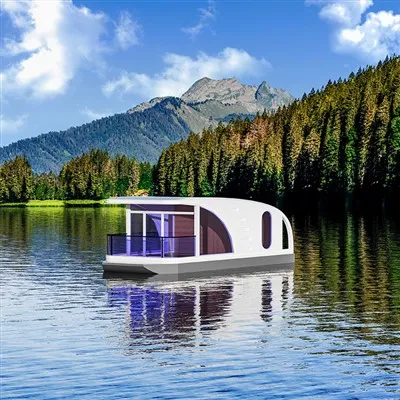
A few years ago, I saw my first capsule house on social media and thought, "Must be a concept render." Then, on a work trip, I passed through a scenic area and spotted several capsule cabins tucked halfway up a hillside, their floor-to-ceiling windows facing a dense fir forest. That was the moment it hit me - this thing had already landed in the real world.
Not a sci-fi prop. Not a showcase mockup at an expo. Actual buildings that people live in and run as businesses.
The rise of the space capsule house has been interesting to watch. It never screamed "disrupting traditional housing." Instead, it slipped in through two very specific entry points: spatial efficiency and application flexibility. The former speaks to land-constrained suburbs and scenic zones; the latter answers a very real need among guesthouse operators and private owners who want one structure to serve multiple purposes.
Put bluntly: the market chased it, not the other way around.
────────────────────────────────────────────────────────────
02 Modular - The Part Nobody Talks About Enough

Most people's first reaction to a capsule house fixates on the look - that streamlined shell, the massive glass panels, the spaceship silhouette. Sure, it grabs attention. But what really sets a prefab capsule house apart from conventional buildings isn't the exterior. It's the whole factory prefabrication + on-site assembly logic.
We all know the traditional build routine: find land, find a designer, find a contractor, supervise progress, deal with surprises. A six-month timeline is considered normal. A prefab capsule house flips that entirely - most of the structure is completed in a factory in one pass, then transported to the site for assembly, utility hookup, and done.
The shift isn't just "it's faster." It means someone without a construction background can actually participate. You don't need to understand civil engineering. You don't need to coordinate three or four crews. You just need a suitable site and a reliable manufacturer.
Zooming out, this logic extends to a lot more than housing - post-disaster emergency shelters, remote workstations, temporary commercial spaces. The replicability of a capsule cabin makes it less "a new type of house" and more the blueprint for a new kind of infrastructure.
────────────────────────────────────────────────────────────
03 You Have to Step Inside to Believe It Breathes

The question people who haven't been inside always ask: doesn't it feel suffocating?
Honestly, I thought the same before I walked in. But capsule tiny homes approach space planning in a fundamentally different way from traditional small apartments. A conventional compact unit is created by subdividing a larger frame into smaller boxes. A space capsule house, on the other hand, is designed from scratch as a complete, self-contained unit - every centimeter is intentional.
A few details that won me over:
• The daylighting isn't on a "window" scale. Many cabins have nearly an entire wall of floor-to-ceiling glass, deliberately blurring the boundary between inside and outside.
• Storage isn't a "few cabinets shoved in" situation. It's embedded into the wall structure, visually weightless.
• The bathroom, sleeping, and living zones are separated softly - shifts in floor height and circulation flow, not rigid brick walls.
This is exactly why a prefab guest house with bathroom has taken off in the North American backyard market. It packs a complete living unit into an incredibly small footprint. Guests don't need to enter the main house - they have their own bathroom, their own bed, their own little deck. The experience holds its own against any boutique hotel.
────────────────────────────────────────────────────────────
04 Why Guesthouse Owners Keep Choosing It

I've talked to a handful of friends running guesthouses, and the people who pick capsule homes to operate all converge on the same logic: high revenue per square meter, manageable maintenance costs, and enough visual distinction to stand out.
The traditional guest house in backyard route is either a wooden cabin (poor soundproofing, constant upkeep) or a converted shipping container (freezing in winter, baking in summer, compromised living quality). The factory manufacturing process behind a space capsule house delivers consistent sealing and insulation standards, with far less batch-to-batch variation than on-site construction.
Then there's the hidden advantage: organic reach. Put a distinctively shaped capsule cabin in your yard or on a hillside, and guests will naturally photograph it and share on social media. That's not exposure bought with an ad budget - it's content baked into the product form itself. For any accommodation business that relies on online bookings, that's worth more than almost anything else.
────────────────────────────────────────────────────────────
05 Beyond Just Living

Right now, capsule homes have the strongest traction in the USA and Europe, but Asia's growth curve is sharpening. Scenic spots, campgrounds, even creative districts in cities are bringing in modular capsule homes as supplementary facilities.
And not just for housing. I've seen one turned into a private art studio. A compact showroom. An outdoor yoga room. One was even placed right by the ocean as a rest station for a dive base. The visual language of inside dome homes and capsule housing is actually complementary - one leans toward immersive experience, the other toward functional solutions. It's never been about one replacing the other.
The imaginative ceiling for modular capsule housing hasn't even come into view yet.
────────────────────────────────────────────────────────────
06 A Word on the Investment Side

Zoom out a bit, and capsule houses for sale represent more than a property purchase. They offer a path to enter the residential sector with lighter capital.
Traditional real estate investment has well-known barriers: heavy upfront capital, long recovery cycles, low liquidity. A space capsule house, by contrast, has manageable unit costs, flexible deployment, and switchable use cases - run it as a guesthouse today, reclaim it as a holiday home a couple of years down the line. That gives smaller-scale investors an actual seat at the table.
This isn't a "guaranteed return" pitch - every investment carries risk. But modular housing at least offers a choice: you can start with one unit instead of betting on an entire building from day one.
────────────────────────────────────────────────────────────
07 One Last Thought

The space capsule home isn't here to declare war on traditional housing. It's more like a parallel lane - an option for those who don't want to walk the old "buy land, build, renovate" path.
Some people use it to solve short-term accommodation needs. Some build long-term business plans around it. Some are just drawn to the way it looks. Whatever the motivation, it points to one thing - our definition of "home" is becoming more fluid, more diverse.
And this shift? It's probably only getting started.
────────────────────────────────────────────────────────────